
Martial Arts for Building Community Through Welcome and Empowerment

Training can do more than strengthen an individual; it can give people a shared place to grow. Martial arts for building a strong community brings students together through respect, teamwork, self-defense education, and the steady work of learning alongside one another. The result is a culture where progress matters, and every person has a role in supporting it.
It makes sense to look beyond techniques when choosing a martial arts community. The way students treat one another, how instructors guide the room, and whether newcomers feel welcome all shape the experience. This article explores how discipline and mutual respect can build trust, how training supports physical and mental well-being, and how practical self-defense education can strengthen confidence. You’ll also see what makes a welcoming culture and how shared goals, peer support, and mentorship can turn a class into a place of connection. Real community is built through consistent effort, one respectful interaction at a time.
Table of Contents
1. Discipline and respect
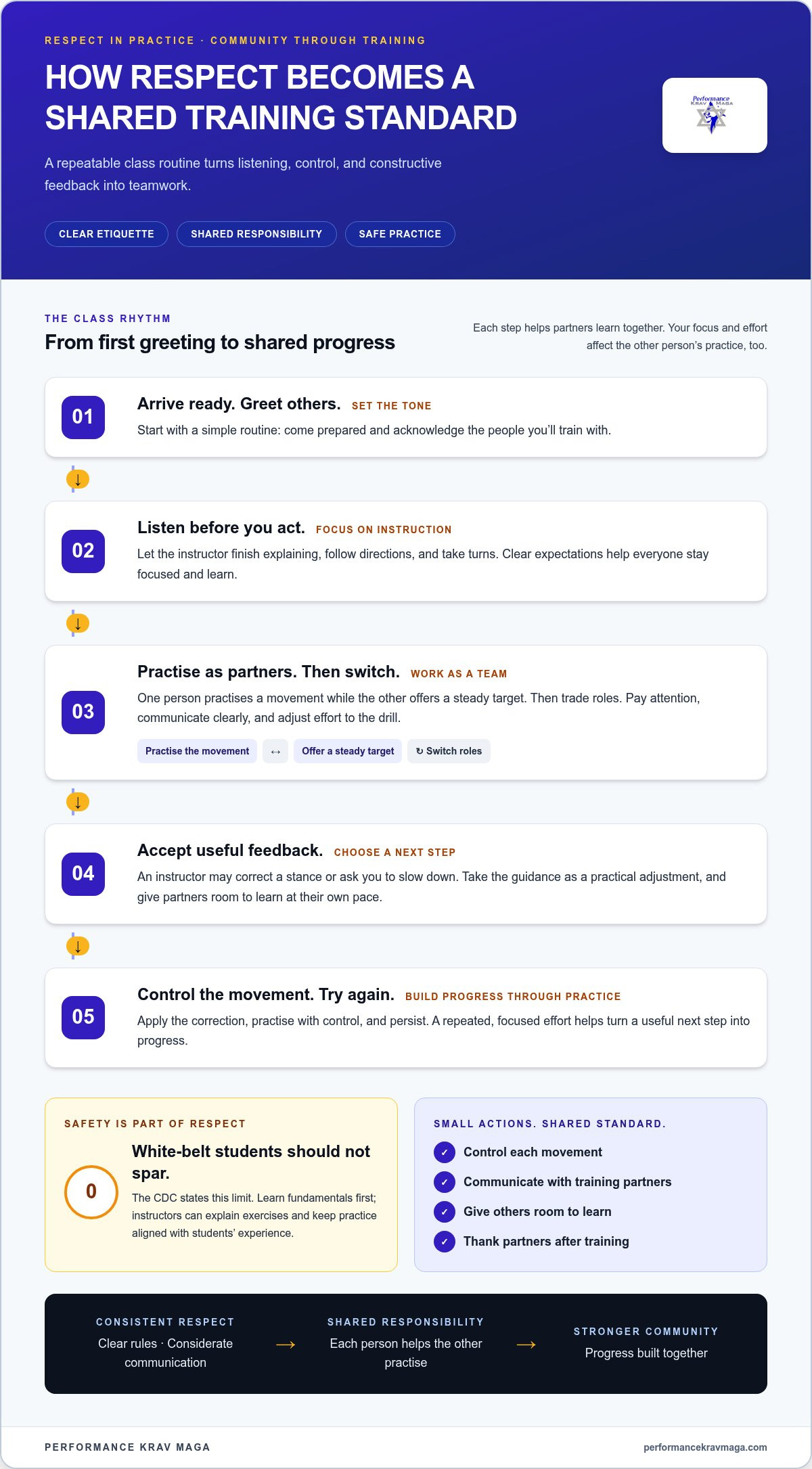
Respectful martial arts communities rely on clear etiquette, consistent rules, and considerate communication. Students can listen while an instructor speaks, follow directions, take turns, and control their movements with partners. A simple routine helps: arrive ready, greet others, focus during instruction, and thank training partners afterward. These shared actions make respect visible, not just a word repeated in class.
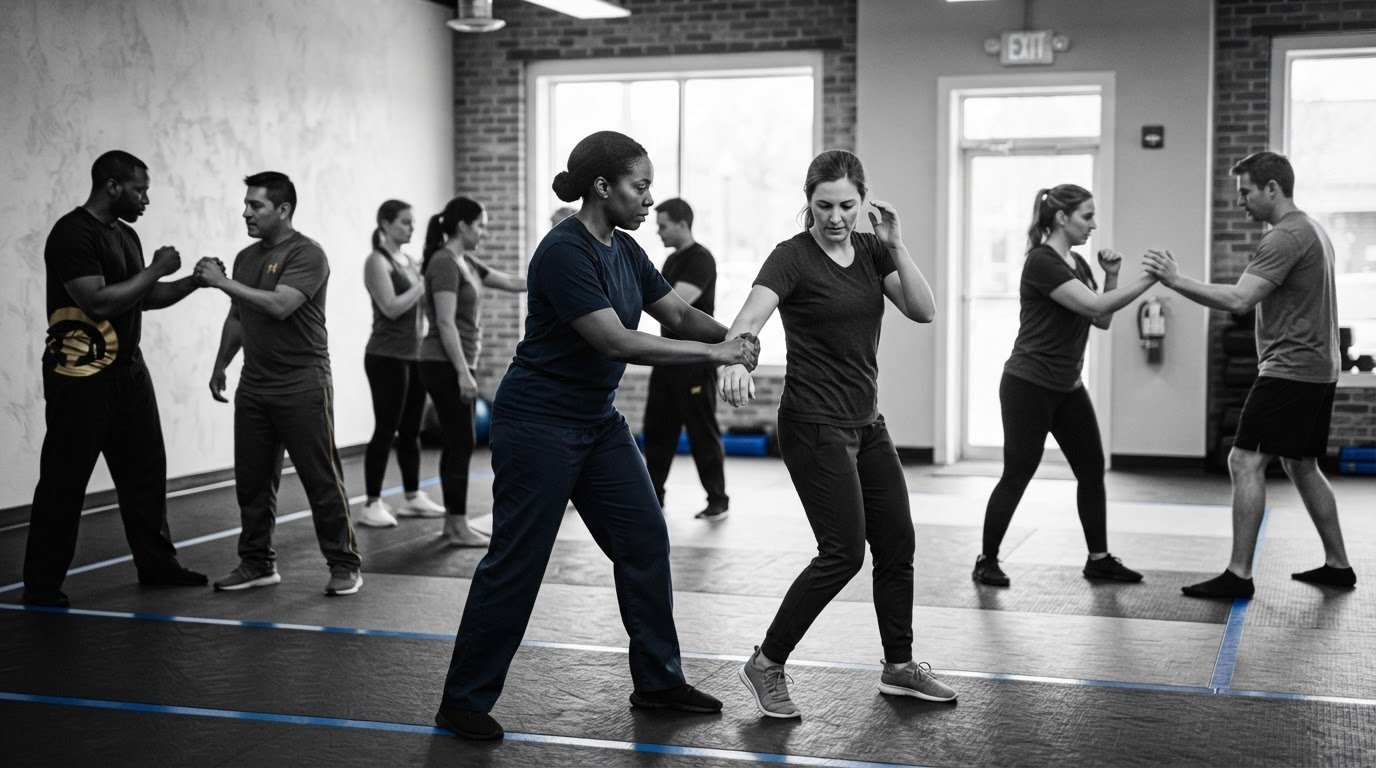
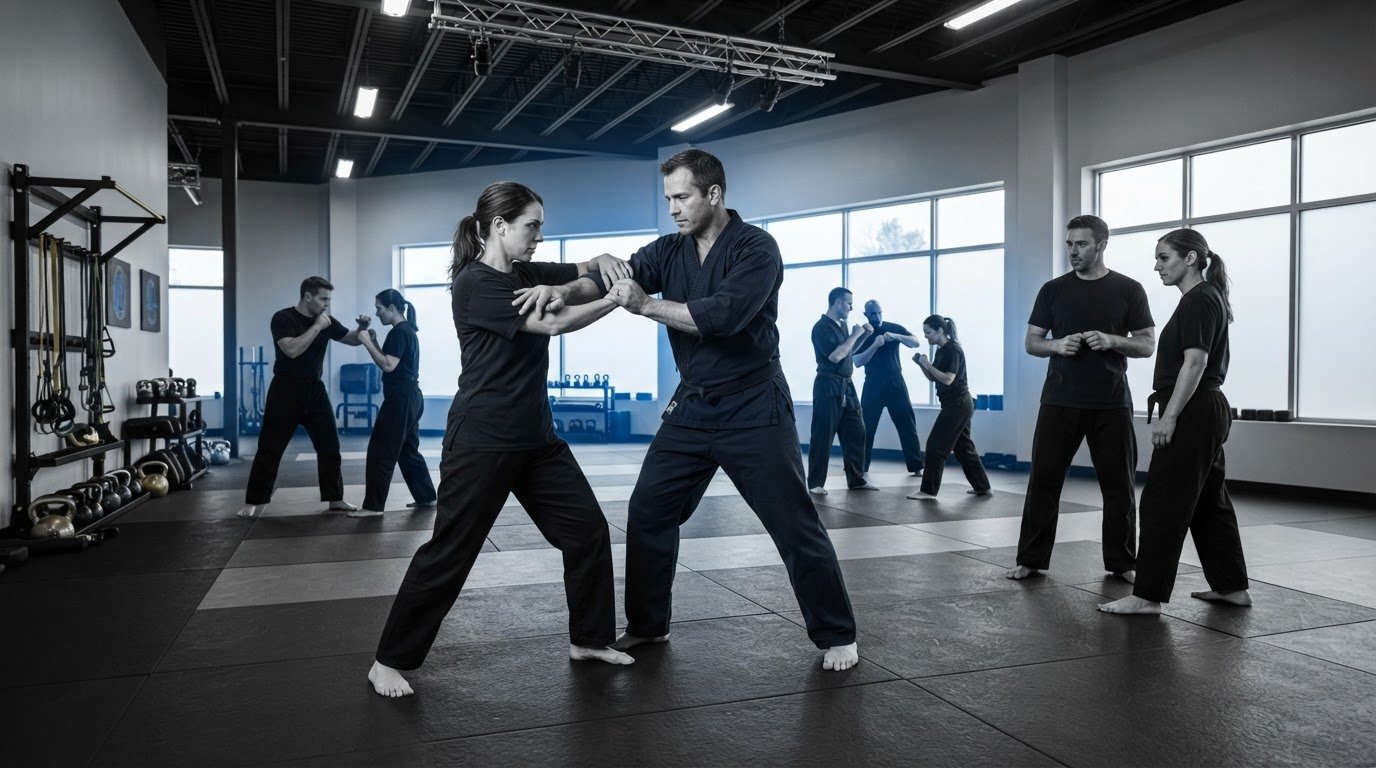
Training also gives students a shared goal: improve through practice while helping partners learn safely. During a paired drill, one person practices a movement while the other offers a steady target, then they switch roles. Both students must pay attention, communicate clearly, and adjust their effort to the exercise. That teamwork builds accountability because each person’s focus affects the other’s practice.
Discipline develops through repeatable choices. A student listens to the full instruction before trying a technique, practises with control, accepts feedback, then tries again. Instructors can reinforce this sequence with specific guidance, such as correcting a stance or asking a student to slow down. Constructive feedback gives learners a practical next step, while persistence turns that step into progress.
Mutual respect extends beyond rank or experience. A more experienced student can model a movement patiently instead of showing off, while a beginner can ask questions and keep practicing without dismissing advice. In a class, partners may have different strengths and learning speeds. Recognizing those differences fosters humility and shared responsibility, and makes empowerment something students build together.
For children and teenagers, structured training can connect respect with everyday actions. Following a class rule, waiting for a turn, and responding calmly to correction are concrete ways to practise self-control. Instructor mentorship can help young students understand why rules matter: they protect focus, support learning, and set expectations for treating teachers and peers responsibly.
Safe training rules are part of respect, too. The Centers for Disease Control and Prevention (CDC) says white-belt students should not spar. Clear limits help students understand that progress comes from learning fundamentals first, not rushing into contact. Instructors can explain each exercise and keep practice aligned with students’ experience.
To help build a respectful class in Egg Harbor City, New Jersey, practise a few habits: listen before acting, control each movement, give partners room to learn, and receive corrections without taking them personally. These habits turn discipline into a shared standard. Over time, martial arts for building a strong community becomes less about individual performance and more about helping one another improve.
2. Physical and mental well-being
A martial arts class can combine movement, balance, and focused practice. A student might step through a sequence, change direction, hold a stance, then repeat the movement with control. These demands engage the whole body and can develop strength, flexibility, and cardiovascular fitness. The specific benefits depend on the movements practised and how consistently a student trains.
Coordination grows through deliberate repetition. A beginner might practise stepping while keeping their hands in a guard position, then add a simple turn when the basic movement feels familiar. This links footwork, posture, and attention. Repeating techniques also builds endurance by sustaining effort across drills rather than relying on one burst of energy.
Fitness is only one part of the experience. Concentrating on an instructor’s demonstration and applying it in sequence gives the mind a clear task. That focus can create a break from everyday pressures and support stress management. A student can notice tension, reset their breathing, and return their attention to the next movement. These are practical habits, not a substitute for mental health care.
Progress is easier to notice when students track specific skills. They might remember a sequence without prompting, maintain balance through a turn, or complete a drill with better control. An instructor can use these examples to offer useful feedback and choose an appropriate next challenge. Steady progression helps students work toward personal goals without treating every class as a performance test.
Group practice adds camaraderie to individual effort. During a partner drill, each person has to pay attention to the other’s pace and movement. Mutual respect supports that exchange: partners give one another room, follow directions, and adjust their effort when needed. Cooperation makes training more considerate and helps students learn through shared practice.
In a welcoming class, students can support one another without comparing progress. A simple habit is to acknowledge a partner’s effort after a difficult sequence, then focus on the next repetition. This encouragement can help newcomers stay engaged, while experienced students strengthen their patience and communication. Fitness, mental focus, and social connection can grow together through everyday interactions.
In Egg Harbor City, New Jersey, anyone seeking structured practice for fitness and focused movement can explore martial arts classes. Look for a class where instruction gives students clear practice goals and where partners can learn through mutual respect. The right training environment makes each repetition useful, while shared effort gives students a reason to keep showing up.
3. Self-defense education and empowerment
Self-defense education gives people practical skills for responding to challenging situations. Training can introduce awareness, clear communication, and physical techniques, while emphasizing judgment about when to create distance or seek help. For example, a student might practise noticing an approaching person, setting a firm boundary, and moving toward a safer space. The goal is preparation, not confrontation.
Confidence can grow as students learn and repeat techniques under instruction. A beginner who once hesitated to speak up might practise using a clear voice in a role-play, then apply that skill in everyday interactions. Each purposeful repetition offers a concrete way to notice progress. Training can support personal growth without suggesting that it makes someone invulnerable.
Empowerment also involves managing conflict before it becomes physical. Students can practise verbal de-escalation by keeping their tone controlled, using direct language, and avoiding insults or threats. In a scenario, a person might say, “I don’t want trouble,” then move toward an exit. Calm communication and mediation are useful tools alongside physical self-defense skills.
Good instruction connects technique with values. A partner drill, for instance, can teach a student to move with control, stop when directed, and respect another person’s boundaries. Those choices distinguish responsible self-defense education from aggression. Students learn that strength includes restraint, awareness, and the ability to choose a measured response.
Learning together can carry those values into the wider community. A school might hold a self-defense workshop or seminar where participants practise boundaries, awareness, and basic responses in a structured setting. Students can share practical lessons with family or peers, keeping the message focused on safety and respect. Shared experiences can make empowerment a positive, collective effort.
As confidence develops, some students may become more willing to take leadership roles or join local initiatives. An experienced learner could welcome a newcomer, demonstrate a familiar drill, or help organize a community event. These actions turn personal progress into contribution. Leadership means setting a calm example and helping others participate, not claiming authority over them.
In Egg Harbor City, the value of training lies in connecting practical skills with everyday responsibility. A person who can identify a boundary, communicate it clearly, and choose a safe next step has more tools to draw on during uncertainty. Shared learning can strengthen trust between participants, supporting confidence, personal growth, and a community shaped by positive values.
4. Welcoming culture and first impressions
A supportive martial arts school builds belonging through simple, visible actions. An instructor greets visitors promptly, explains where to stand, and introduces newcomers to classmates. During a partner drill, students can invite a new person into the group and explain the exercise. These gestures turn an unfamiliar room into a shared learning space.
Beginners can recognize a supportive community by observing how a class welcomes people and organizes practice. Notice whether the instructor explains routines clearly, students include newcomers, and beginners receive appropriate guidance. A first visit should make the next step understandable, from joining the warm-up to following directions during a drill.
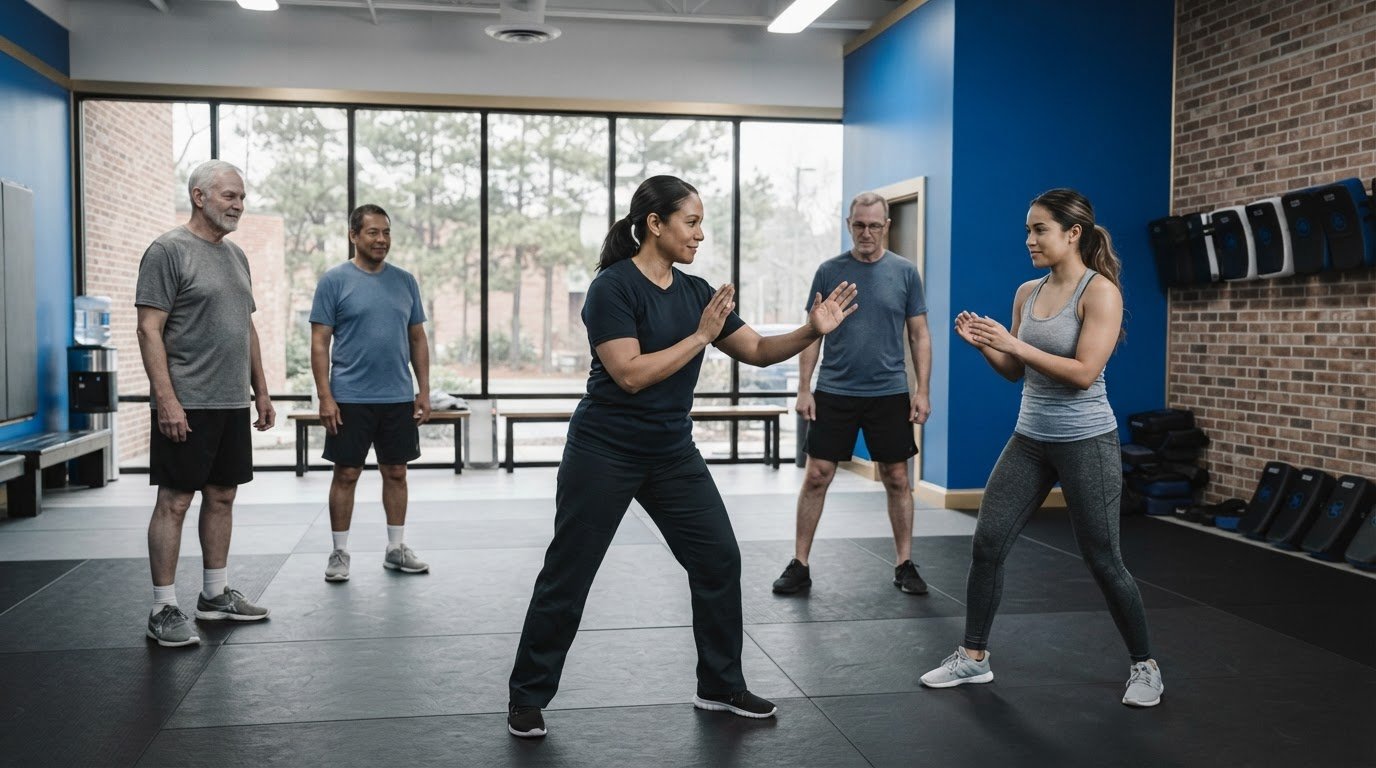
Inclusion requires more than a friendly greeting. Participants differ in age, gender, ability, experience, and learning pace, so instruction can adapt to the person and exercise. An instructor might demonstrate a movement slowly, offer a lower-impact version, or give a student more time to practise. These adjustments let more people take part while keeping the focus on improvement.
Classes can encourage cultural understanding through martial arts traditions. An instructor might explain the meaning of a bow or the history behind a training custom, then invite respectful questions. Students learn that practices come from distinct cultural backgrounds, not just from a sequence of techniques. Sharing that knowledge builds appreciation for difference without treating one tradition as universal.
Social connection grows through repeated, low-pressure interactions. A classmate can learn a newcomer’s name, pair with them for a basic exercise, and offer a brief welcome afterward. Instructors can create opportunities for students to introduce themselves before class. These small steps help people connect through shared effort, rather than expecting every beginner to start conversations alone.
Training carries physical risks, including strains or contact-related injuries, and exclusion can arise when drills move too quickly or ignore individual needs. Schools can reduce these barriers by explaining exercises, controlling practice intensity, adapting movements, and setting clear conduct expectations. Students should be able to follow directions, pause if an exercise causes discomfort, and receive respectful instruction.
For Egg Harbor City residents, a welcoming culture is visible in the room: a warm greeting, clear directions, considerate partners, and space for different abilities. These details show how strength can coexist with care. A school that treats defense training as shared learning can help newcomers build connections while developing confidence and practical skills.
A lasting first impression grows when welcome continues beyond arrival. Martial arts schools can welcome newcomers by greeting visitors promptly and warmly. Practicing and appreciating martial arts traditions from different cultures can promote cultural understanding and appreciation for diversity. Karate therapy communities welcome participants regardless of age, gender, or ability. These principles can shape how a class introduces its customs and makes room for different participants. A newcomer can ask about a tradition, observe how others practise it, and take part in a way that suits their needs. Warm greetings and respectful attention can help make the school feel accessible while honoring the varied backgrounds and abilities of the people who train there.
5. Martial arts as a tool for community building
Which martial arts are best for building a strong community? No single style guarantees belonging; shared values, welcoming teaching, and regular opportunities to learn together matter more. A strong community grows when beginners and experienced students contribute, support progress, and share responsibility.
Communities can differ across karate, judo, Brazilian jiu-jitsu, taekwondo, and boxing because their training practices differ. Karate often includes striking and structured forms; judo focuses on throws, while Brazilian jiu-jitsu emphasizes grappling. Taekwondo commonly features kicking techniques, and boxing develops punches and footwork. The best fit depends on whether people feel respected, included, and motivated to keep learning together.
Community programs can bring children and adults together beyond regular practice. A school might host a self-defense workshop, arrange a demonstration at a local school, or organize a charity event. Social gatherings give families and students another setting to connect, while mentorship can help experienced students support newcomers.
Shared teaching builds connection through contribution. A student who understands a basic movement can demonstrate it slowly for a newer partner, then practise alongside them. The exchange benefits both people: one reinforces their knowledge, and the other gains a friendly point of contact. Belonging grows through useful actions, not just group labels.
Martial arts schools can create collective traditions that make participation meaningful. Students might welcome new members, recognize a classmate’s progress, or work together on a community demonstration. These moments connect personal effort to a wider purpose. They also show children that leadership can mean helping others, while adults can contribute through encouragement, organization, or sharing skills.
Open houses give residents a low-pressure way to see how a school teaches and welcomes participants. The U.S. Government Publishing Office has documented local martial arts schools hosting open houses to introduce their art to the community. A local event can help visitors meet students, observe a class, and understand the values guiding practice.
In Egg Harbor City, community-building can start with a simple invitation: attend a public event, welcome someone new, or help organize a shared activity. Each step turns training into a connection that extends beyond the practice space. Explore ways to train together and take a practical step toward stronger local ties.
The personal benefits of martial arts can support development, unity, and resilience in a community, giving shared training meaning beyond individual progress. Classes bring people from diverse backgrounds together around self-improvement, while a dojo can serve as a hub for building social bonds. A shared focus on growth can connect participants with different experiences.
A welcoming culture also depends on how members treat one another. Martial arts communities emphasize respect, humility, and support to foster welcoming environments, and schools can encourage existing students to introduce themselves to newcomers. In a karate therapy community, sharing experiences can create connection and provide a safe, non-judgmental space for participants. Together, these practices create opportunities for people to meet, share experiences, and build social bonds through their participation.
Performance Krav Maga: Self-defense classes
Performance Krav Maga offers self-defense classes for people ready to develop practical skills through guided training. If you’re looking to build confidence, learn alongside others, and make self-defense part of your personal growth, these classes offer a direct next step. Martial Arts Classes provide another way to practise discipline, respect, and shared effort with fellow students. Each person brings different goals to training, and progress begins by showing up ready to learn. Community grows through that ongoing participation: listening, practising, and supporting others as they work toward their own goals. To learn more, visit Performance Krav Maga.
Make Your Next Step Count
A stronger community doesn’t appear all at once. It takes people who choose to participate, keep learning, and make room for others to do the same. If you’re considering martial arts for building a strong community, focus on the kind of practice you want to carry into everyday life: steady, respectful, and shared.
Performance Krav Maga offers Krav Maga classes, self-defense classes, and martial arts classes in Egg Harbor City. Each offers a way to begin training and join a learning community. Choose the step that fits your goals, then bring your attention and effort to the mat. Progress starts with showing up, and your presence can help make the space stronger for the next person, too.
Explore classes at Performance Krav Maga and take your next step toward training with purpose. Your effort can help shape the kind of community you want to be part of.
Frequently Asked Questions
What should I look for in a welcoming, community-focused martial arts school?
Look for a class where respectful treatment continues during drills, partner changes, and feedback, not just at the door. Notice whether students make room for newcomers, explain unfamiliar routines, and respond calmly when someone needs clarification. In Egg Harbor City, consider whether the class’s pace and teaching approach help you participate comfortably. A strong community makes learning feel shared without pressuring everyone to progress at the same pace.
How can martial arts schools build inclusive communities for different ages, abilities, and backgrounds?
Schools can build inclusion with clear instructions and adaptable ways to practise the same learning goal. A partner exercise could have a slower version, a standing option, or time for questions, while still letting students train together. Instructors can learn how participants prefer to be addressed and explain unfamiliar customs without making assumptions. These choices help people across Egg Harbor City take part with dignity and contribute at their own pace.
Comments