
Self-Defense for Non-Athletic People: Start Where You Are

Can self defense for non-athletic people build practical skills without requiring athletic ability first? Yes. You don’t need to arrive fit, fast, or experienced to begin learning how to respond with awareness and purpose.
It’s understandable to worry that a class will push you too hard or leave you feeling out of place beside experienced students. A supportive learning environment introduces skills step by step and makes room for different starting points. The focus is on learning and practising, not proving your strength or keeping up with someone else.
This guide explains what to consider before starting, how to recognize instruction that supports your learning, and how to set manageable progress markers. You’ll also see why awareness, practical skills, and steady practice matter more than starting at a particular fitness level.
At Performance Krav Maga in Egg Harbor City, programs are tailored for every skill level in a no-ego, family-like atmosphere. Start where you are and work toward practical skills at a pace that supports your individual goals.
Table of Contents
Can You Learn Self-Defense Without Being Athletic?
Maybe you have low stamina, feel awkward coordinating new movements, or haven’t exercised in years. You might wonder whether age will make it harder to keep up, or whether everyone else in class will already know what to do. Those concerns are common, but they don’t mean you have to rule out training.
Beginner-friendly self-defense starts with your current ability. Skills can be introduced progressively, practised at a manageable pace, and revisited as you learn. You don’t need to arrive fit or perform every movement perfectly. The aim is to understand the fundamentals and build familiarity through practice. The general overview of self-defense also illustrates that the subject involves more than physical techniques alone.
What does non-athletic mean when starting self-defense?
There’s no single “non-athletic” starting point. For one person, it means getting winded quickly; for another, it means limited coordination or returning to exercise after a long break. Your fitness may shape how you approach practice, but it doesn’t determine whether you can pay attention, learn, and work at an appropriate pace.
Practical self-defense is about learning adaptable ways to respond to danger, not proving athletic ability. You don’t need to match another student’s speed or range of motion to begin learning fundamentals.
Does self-defense training have to be competitive?
No. Practical self-defense training and preparing to win a sport match have different aims. Competition focuses on performance within a ruleset. Self-defense learning emphasizes practical responses and decision-making. Early practice can focus on understanding basic movements and repeating them with instruction.
Fitness and confidence can be personal goals, and training gives you a way to work toward them. They aren’t entry requirements. In a Krav Maga class, you can focus on the skill in front of you instead of trying to look advanced on day one.
Measure early progress by what you’re learning: understanding a movement, remembering an instruction, or becoming more comfortable with repetition. These markers keep your attention on your own development rather than comparison.
Start with fundamentals: Build familiarity with basic positions and movements before adding complexity.
Choose an appropriate pace: Practise with enough time to understand a skill instead of trying to match someone else.
Notice how you learn: Ask for clarification when a movement feels confusing, then focus on improving one detail at a time.
For self defense for non-athletic people, the goal isn’t to become an athlete before training begins. It’s to learn practical skills from your current starting point and develop through steady practice. Age, stamina, or coordination may shape how you begin, but they don’t have to define your next step.
How Beginner-Friendly Self-Defense Training Builds Practical Skills
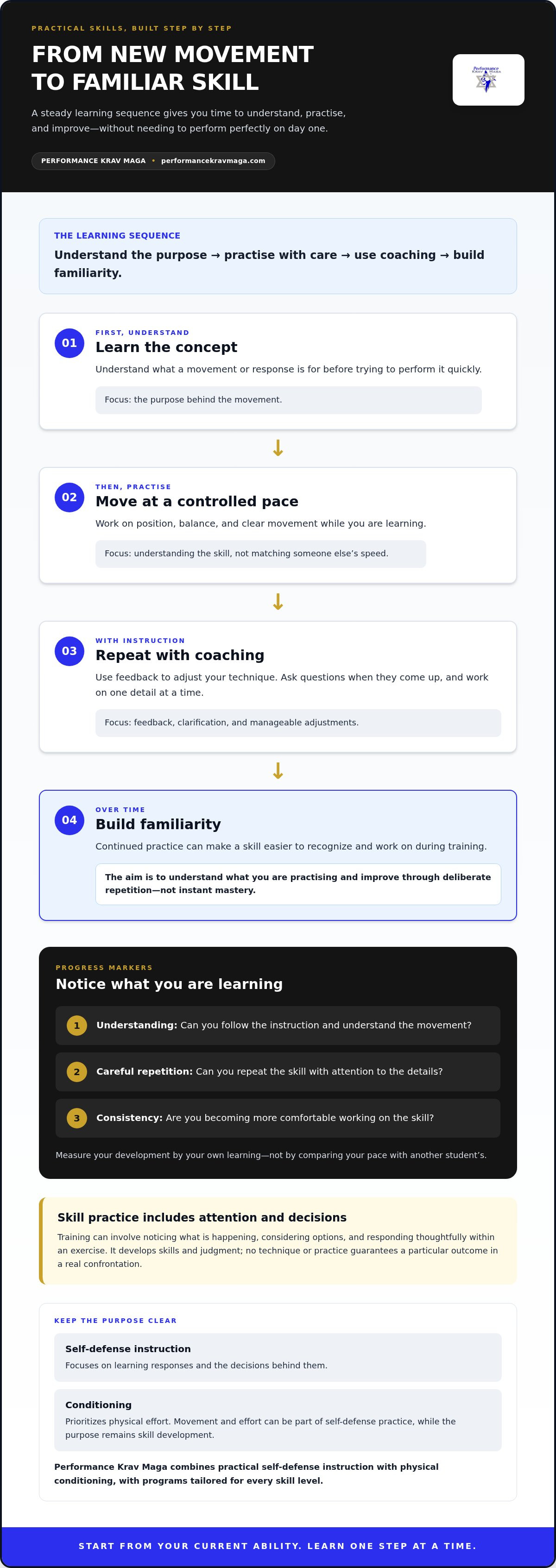
Useful skills are built in stages. First, understand what a movement is for. Then practise it at a controlled pace, get feedback, and repeat it until it feels more familiar. The aim isn’t instant mastery. It’s to understand what you’re practising and improve through deliberate repetition.
Learn the concept: Understand the purpose of a movement or response before trying to perform it quickly.
Practise at a controlled pace: Focus on position, balance, and clear movement while you’re learning.
Repeat with coaching: Use feedback to adjust your technique and ask questions as they come up.
Build familiarity: Continued practice can make a skill easier to recognize and work on during training.
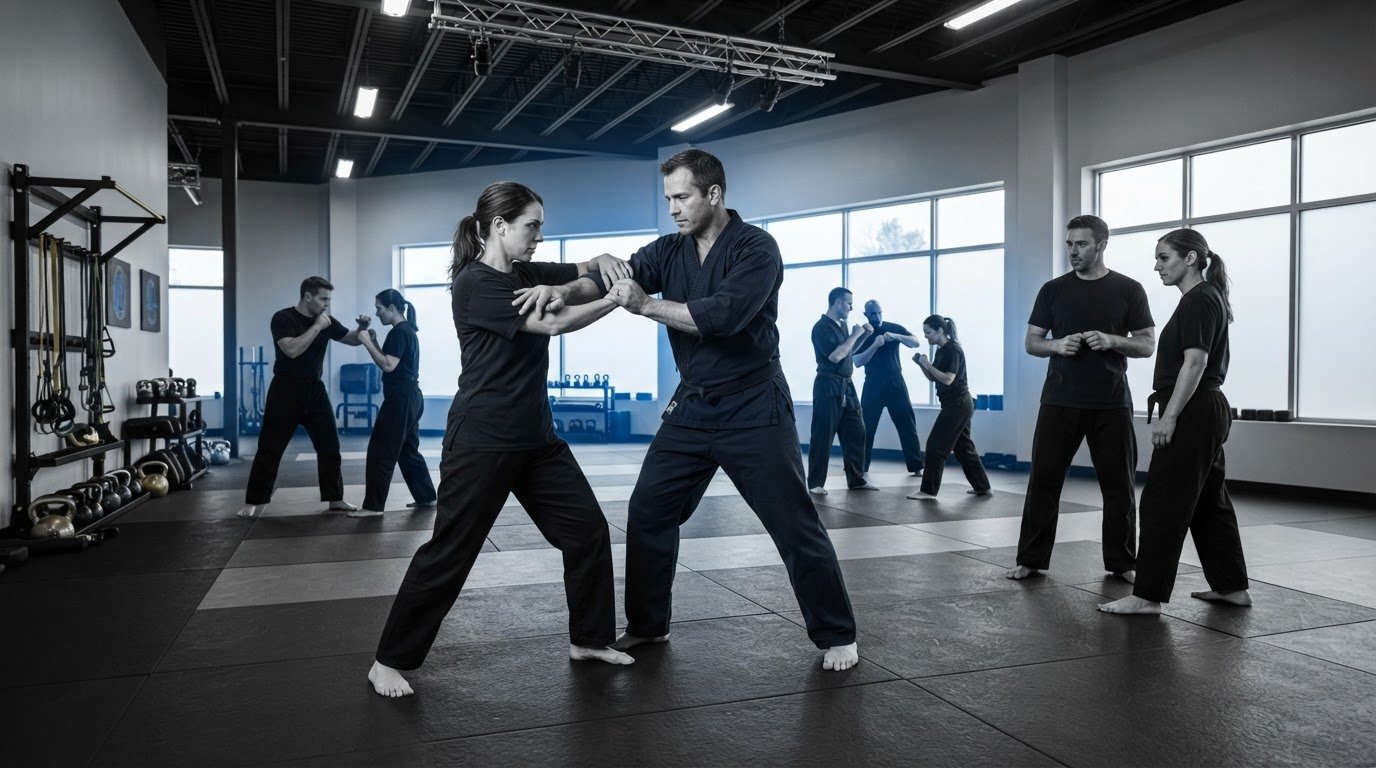
This sequence gives you time to process new information. An instructor can break a complicated movement into manageable parts, while repetition helps you notice what feels stable and what needs adjustment. Trying to perform perfectly on day one can distract from the essentials. A steady pace leaves room to learn.
How can a student build confidence without rushing?
Measure progress by whether you understand the instruction, can repeat a skill with care, and are becoming more consistent. Don’t compare your pace with another student’s. Feedback can help you work on one detail at a time. Confidence may grow through repeated practice, but there’s no need to force it or treat it as a test.
Practical training also involves attention and decision-making. In class, students can practise noticing what’s happening, considering their options, and responding thoughtfully within an exercise. Training can help you explore these choices, but no technique or practice guarantees a particular outcome in a real confrontation. The goal is to develop skills and judgment, not to promise control over unpredictable situations.
What makes practical self-defense different from fitness training?
Training focused on conditioning prioritizes physical effort. Self-defense instruction focuses on learning responses and the decisions behind them. Movement and effort are part of that practice, but the purpose is skill development. Performance Krav Maga combines practical self-defense instruction with physical conditioning, with programs tailored for every skill level.
For a closer look at how physical training relates to readiness, explore this Krav Maga workout and real-world readiness guide. Think of gradual practice as building familiarity, one coached repetition at a time. To explore practical training in Egg Harbor City, learn about Performance Krav Maga and its training approach.
How to Judge Whether a Self-Defense Class Fits Your Ability
A class should help you learn, not make you feel you need to prove yourself. For self defense for non-athletic people, instruction matters: look for clear explanations, a pace that leaves room to practise, and respectful treatment. Learning should matter more than keeping up or showing off.
Use this checklist to assess whether a class supports your progress:
Attentive coaching: Instructors explain movements, offer useful feedback, and make space for questions.
Manageable pacing: Students have time to understand and practise a skill before being expected to perform it at speed.
Clear fundamentals: Lessons build from understandable concepts instead of assuming everyone has prior experience.
Respectful class culture: Students and instructors treat each other with patience, without ridicule or pressure to compete.
Students don’t all begin with the same stamina, coordination, experience, or comfort level. Adaptable instruction can keep the learning goal clear while giving each person room to work at an appropriate pace.
What should a welcoming training environment feel like?
Look for respectful coaching, encouragement, and room to learn at your own pace. A no-ego environment helps newcomers focus on understanding the skill instead of measuring themselves against experienced students. Performance Krav Maga in Egg Harbor City has a family-like, no-ego atmosphere. Alfred Tyson’s testimonial praises that culture and the support for students’ personal goals.
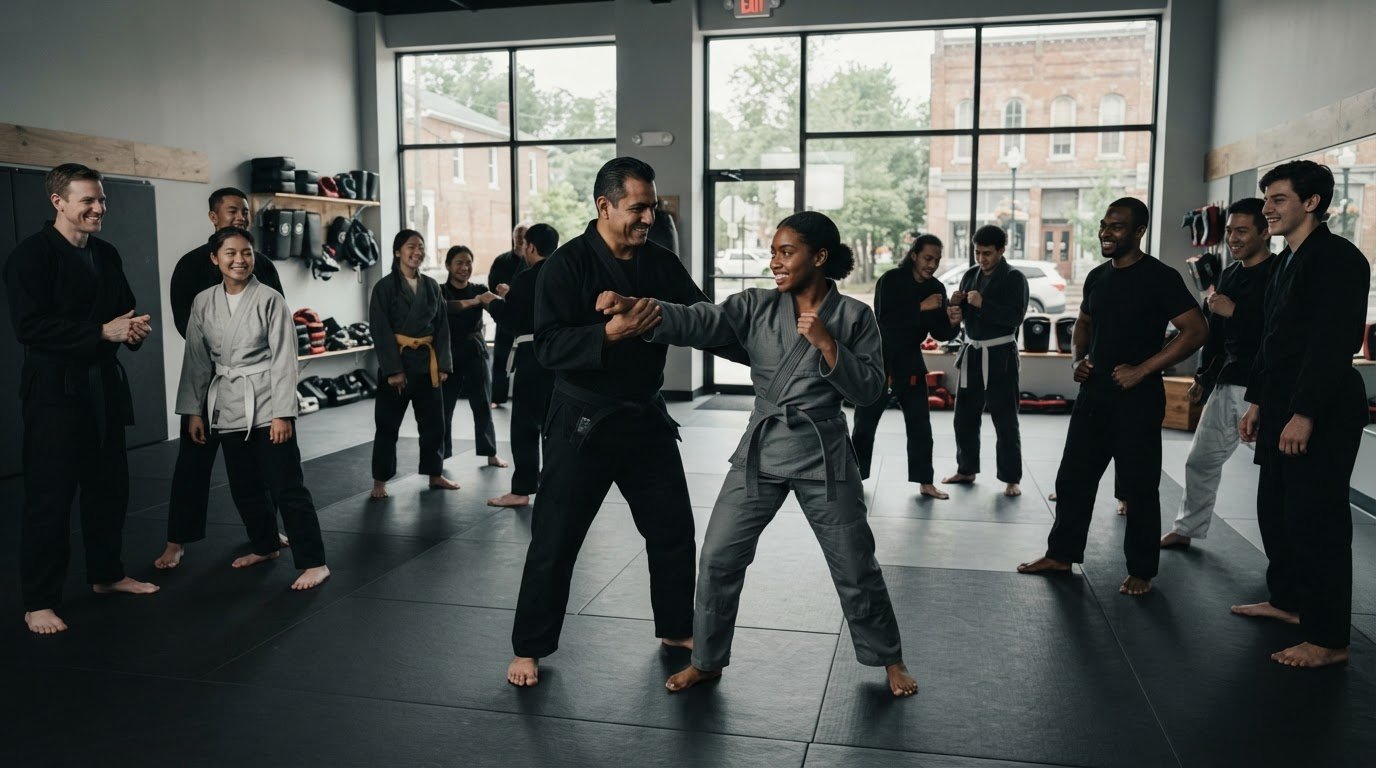
A welcoming culture doesn’t remove the challenge of learning. It makes the challenge constructive: you can concentrate on a movement, take in feedback, and keep practising without feeling that a mistake defines you. If you’re unsure about fitting in, feeling respected in the room can make those first steps more approachable.
Which training focus should a new student explore?
Start with what you want to learn, then consider which program focus fits that goal. Self-defense Fundamentals covers foundational learning. Weapons Defense and Ground Defense focus on distinct areas of self-defense training; they aren’t required steps in a fixed sequence. Performance Krav Maga tailors programs for every skill level.
You don’t have to choose the option that sounds most advanced. Look for a focus that connects with your goals and gives you skills to practise. Explore Performance Krav Maga’s training in an atmosphere centered on individual progress, mutual respect, and practical learning.
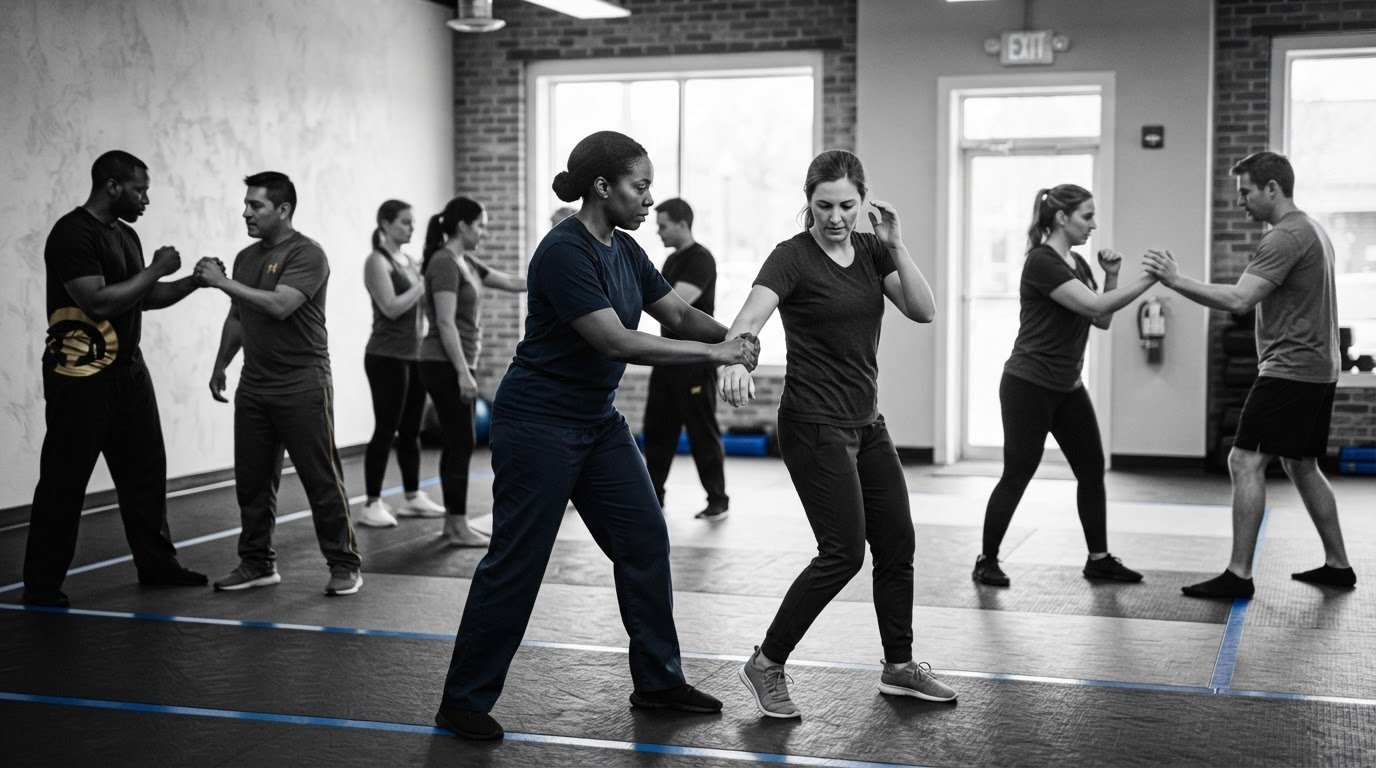
How to Start Self-Defense Training When You Feel Out of Shape
Feeling out of shape can make the first step seem bigger than it is. You don’t have to settle every question about your fitness before you begin. Decide what you want to learn, be honest about what feels comfortable today, and treat practice as a chance to develop skills rather than a test of your current ability.
A simple plan can turn uncertainty into a manageable starting point:
Choose a learning goal. You might want practical self-defense skills, greater confidence, a way to work toward fitness, or a consistent activity.
Notice your current comfort. Consider which kinds of movement feel familiar and which feel new. This helps you describe your starting point without judging it.
Focus on one skill at a time. Learn the fundamentals before expecting fluency or speed.
Set a personal marker. Track whether you understand an instruction, feel more comfortable practising, or are showing up consistently.
This approach is useful for self defense for non-athletic people because it replaces the vague pressure to “get fit first” with a clear learning focus. Your starting point is information, not a verdict. A class tailored to different skill levels can make practice appropriate to the student while still offering a meaningful challenge.
What can you do before your first training session?
Write down a goal and one question you have about learning. You might want to understand basic self-defense skills and wonder how to approach unfamiliar movements. Note whether you’re returning after a break from exercise or have limited experience. This honest snapshot keeps the focus on learning, not on meeting an imagined standard before you start.
How should you measure progress as a beginner?
Look for small, personal signs of learning: you can explain the purpose of a movement, remember a coaching cue, or practise a fundamental skill with greater attention. Returning to practice may also start to feel more familiar. Progress varies by student, so treat these markers as observations, not deadlines or guarantees. Notice your development instead of ranking it against someone else’s.
For a defined learning option, Performance Krav Maga offers a 6-week practical Self-defense Course in Krav Maga, designed for busy individuals. The course has a clear duration, but that doesn’t mean every student will progress at the same pace or have identical results. The focus remains on developing practical skills through instruction and practice.
For broader local context, the practical self-defense classes guide for Atlantic County offers another perspective on training in the area. Take one manageable step: explore self-defense training at Performance Krav Maga and choose a learning goal that feels relevant to you.
Find Welcoming Self-Defense Training in Egg Harbor City
Starting self-defense training is easier when the setting respects different experience and ability levels. Performance Krav Maga is based in Egg Harbor City and offers programs tailored for every skill level. It’s a local place to explore practical training without feeling you must already be athletic or experienced.
The atmosphere matters, too. A family-like, no-ego culture can help new students settle in, focus on instruction, and work toward personal goals instead of comparing themselves with others. If you’re nervous about standing out, feeling respected in the room can help make learning more approachable.
What makes Performance Krav Maga approachable for different skill levels?
Students come with different backgrounds, comfort levels, and reasons for training. Performance Krav Maga tailors programs for every skill level, so students can approach practical learning from where they are and work toward skills that matter to them.
Training options include Self-defense Fundamentals, Weapons Defense, and Ground Defense. These are distinct programs, not steps you must complete in a set order. The Self-defense Course is a 6-week practical Krav Maga course for busy individuals, with a defined duration for those looking for a focused learning option.
Alfred Tyson’s testimonial highlights the school’s family-like, no-ego atmosphere and its support for personal goals. If you’re concerned about athletic ability, this kind of environment can keep the focus on learning and individual progress, not on proving you belong.
Who leads training at Performance Krav Maga?
Chief Instructor Greg Dziewonski is a 5th-degree black belt and holds Krav Maga Expert Certification from Israel’s Wingate Institute. These credentials offer a clear point of reference as you consider the instruction behind your training. For more local context about the school and its approach, see the Elite Krav Maga classes in Egg Harbor City guide.
You don’t need to settle every doubt before taking a first step. Choose a practical learning goal, begin at your current level, and give yourself room to learn through practice. Explore Performance Krav Maga and take your first step toward self-defense training in Egg Harbor City.
Make Your Next Step a Small, Confident One
You don’t have to feel completely ready before you begin. Choose one reason you want to train, such as learning practical skills or becoming more comfortable with movement, and let that intention guide your next step. With self defense for non-athletic people, progress starts with a willingness to learn, not with meeting someone else’s standard.
Performance Krav Maga offers training in Egg Harbor City with programs tailored for every skill level. Chief Instructor Greg Dziewonski is a 5th-degree black belt and holds Krav Maga Expert Certification from Israel’s Wingate Institute. Learn more about the school and choose a training goal that feels right for you.
Explore Performance Krav Maga and take your first step. Start where you are, keep your focus on learning, and give yourself the chance to grow with practice.
Frequently Asked Questions
Can I learn self-defense if I have never taken a martial arts class?
Yes. Previous martial arts experience isn’t a prerequisite for learning self-defense. Start by identifying what you hope to learn, whether that’s recognizing an unsafe situation, practising a basic response, or becoming more comfortable with unfamiliar movements. Ask an instructor to explain a technique in plain language or demonstrate it again if needed. Curiosity and willingness to practise give you a useful starting point, even if every movement feels new at first.
Is Krav Maga suitable if I am older or have limited mobility?
Age alone doesn’t determine whether Krav Maga is right for you, and training is tailored for different skill levels. Limited mobility can affect which movements feel appropriate, so be clear about your range of motion and any movement restrictions. If you have a health concern, seek guidance from a healthcare professional about physical activity. Approach instruction with an honest picture of what feels comfortable instead of trying to match someone else’s movement.
How fit do I need to be before starting self-defense classes?
There’s no fitness benchmark you need to reach before exploring self-defense classes. The phrase self defense for non-athletic people describes a starting point, not a reason to wait. You might have low stamina, feel stiff, or be returning to activity after a break. Pay attention to how your body responds, communicate if you need to pause, and let your goals guide your effort instead of using another student’s pace as your measure.
Can self-defense training help build confidence as well as practical skills?
Training may support confidence as you become more familiar with practical skills, though people experience progress differently. Confidence doesn’t have to mean feeling fearless. It might mean feeling more prepared to notice discomfort, use a clear boundary, or think through an option instead of freezing in uncertainty. Treat these as possible personal gains, not guaranteed results. Keep your focus on learning judgment and skills, without expecting training to control every situation.
What is the difference between self-defense training and a martial arts competition?
Self-defense training doesn’t require entering a tournament or learning to compete. Competition has rules, an opponent, and a win-or-lose format. Practical self-defense instruction can explore awareness, choices, and physical responses for personal safety. Someone may enjoy competition, but it isn’t a requirement for studying self-defense. If competition makes you hesitant, consider whether the learning goals and class culture match what you want from training.
Can busy adults fit self-defense training into their lives?
Busy adults can make training more manageable by choosing a realistic personal goal and considering what level of consistency fits their lives. Performance Krav Maga’s 6-week practical Self-defense Course is designed for busy individuals. Before starting, think about the time you can commit without adding unnecessary pressure. A sustainable learning routine is more useful than setting an ambitious plan you can’t maintain.
Comments