
Self-Defense for Real Life: 2026 Guide to Practical Survival Scenarios

If a confrontation breaks out in a dimly lit parking lot tonight, will your muscle memory default to a choreographed sport or a survival instinct? Most people realize that self defense for real life isn't found in a trophy case. It's forged in the unpredictable chaos of an actual street encounter where there are no referees and no rules. You're likely skeptical of "mall ninja" techniques that look good in a mirror but fail under the crushing weight of real-world adrenaline. You need practical skills that respect your limited training time while providing a formidable shield against vulnerability.
We agree that the best fight is the one that never happens, but readiness is the only antidote to fear. This guide will show you how to identify, avoid, and neutralize threats using battle-tested tactical principles designed for immediate efficiency in high-stress environments. We'll explore the latest 2026 legal shifts regarding concealed carry and storage, sharpen your situational awareness, and provide a structured path to physical competence. You'll gain the tools to transition from a target to a protector with the quiet professional confidence that defines an elite practitioner.
Key Takeaways
Identify the fundamental differences between sport-based competition and survival under duress to ensure your training translates to the street.
Develop a 360-degree defense against the most frequent street attacks, including sucker punches and grabs, to maintain your standing position.
Understand how to weaponize your natural flinch response using the OODA Loop framework to react faster than an aggressor can move.
Compare tactical training timelines to traditional systems to see how you can achieve proficiency in self defense for real life within months.
Explore the methodology used at Performance Krav Maga to build the situational awareness and confidence needed to neutralize modern threats.
Table of Contents
What Defines "Real Life" Self-Defense?
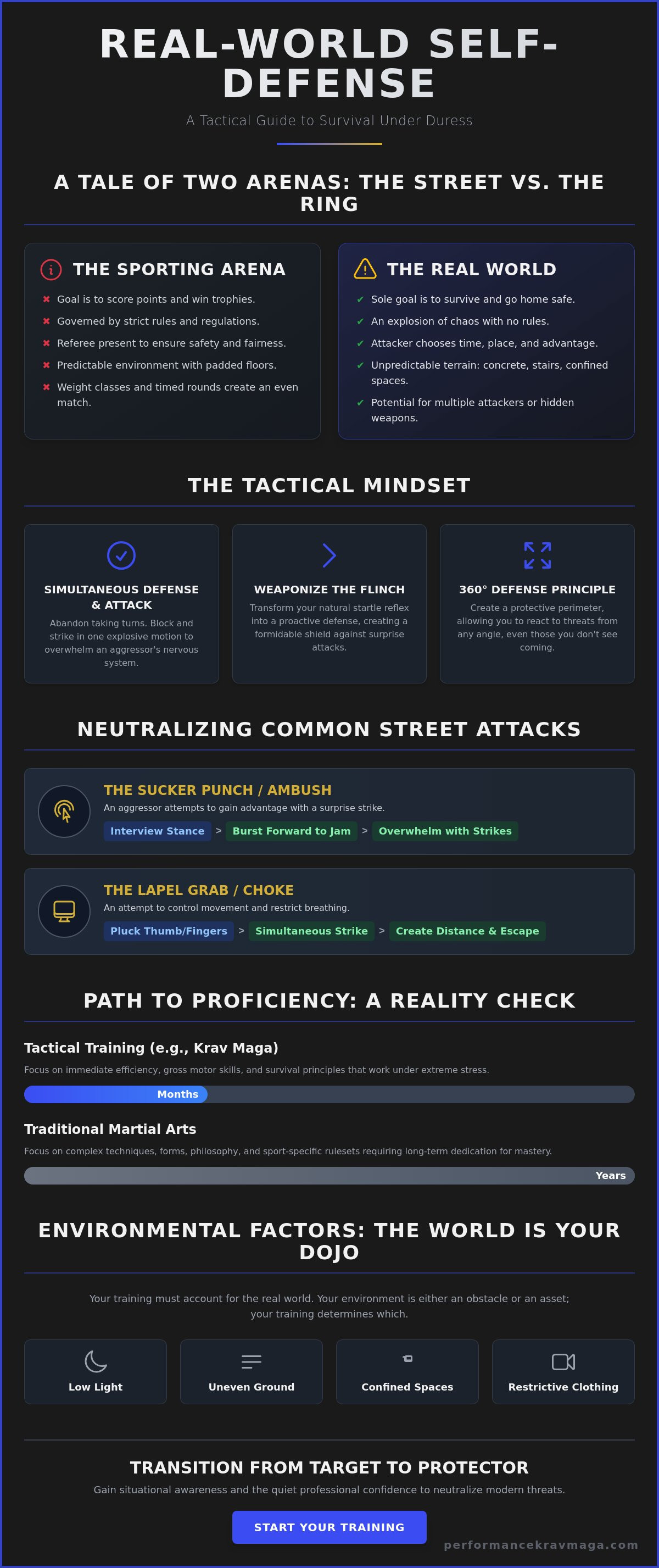
Real-life violence doesn't wait for a bell or a referee's signal. It's an explosion of chaos that demands survival under duress rather than a pursuit of silver or gold trophies. While a gym offers a padded floor and a predictable partner, the street provides no such luxury. Effective self defense for real life focuses on neutralizing a threat with surgical efficiency and immediate aggression. In a dark alley, there is no second place. You are training for the "worst-case" scenario where the goal is to go home safe, not to outscore an opponent on a judge's card.
The concept of "fairness" is a dangerous illusion that can get you killed. An aggressor isn't looking for an even match; they're looking for a victim. To survive, you must abandon the idea of taking turns. You don't block and then strike. Instead, you utilize simultaneous defense and attack to overwhelm the opponent's nervous system before they can escalate their violence. This mindset shift is the foundation of tactical readiness. It transforms a defensive posture into a proactive solution, ensuring you dictate the tempo of the encounter from the first second of contact.
The Rules of the Street vs. The Rules of the Ring
In the ring, you have weight classes, timed rounds, and a professional whose job is to keep you safe. Real life ignores these boundaries. The "law of the jungle" dictates that an attacker will likely be larger, armed, or accompanied by others. They choose the time and place to ensure they have the upper hand. Mastering self defense basics in these unpredictable environments is the difference between freezing and reacting with purpose. For those seeking a comprehensive overview of self-defense, it's clear that the legal and physical stakes are far higher than any sporting commission. There are no rounds. There is only the duration of the threat.
Environmental Factors: Low Light and Uneven Ground
Your training must account for the world you actually live in. You aren't always wearing athletic gear and bare feet. Heavy boots, tight jeans, or a winter coat will radically change your range of motion and kicking ability. Confined spaces like narrow hallways, stairwells, or the interior of a car eliminate the possibility of traditional footwork. You must learn to use your surroundings as a weapon or a shield. A brick wall can stop an attacker's momentum. A handful of gravel can provide the distraction needed to escape. In the world of self defense for real life, your environment is either an obstacle or an asset; your training determines which one it becomes.
Practical Examples: Defending the 3 Most Common Street Attacks
De-escalation is your first and most effective tool. If you can walk away or talk your way out of a confrontation, you've already won. However, when words fail and the distance closes, your response must be immediate and overwhelming. Real-life violence is rarely a duel; it is often an ambush. According to FBI crime statistics on robbery, many attacks occur in public spaces where the aggressor uses the element of surprise to gain compliance. To counter this, we utilize a 360-degree defense principle. This system creates a protective perimeter around your body, allowing you to react to threats from any angle without needing to see the strike coming perfectly. You must transition from a passive victim to an aggressive predator in a split second. This isn't about being a bully. It's about ending the threat so you can escape safely. Effective self defense for real life requires this total commitment to the counter-attack.
Scenario 1: The Ambush or Sucker Punch
Keep your hands in an "interview stance." This means your palms are open and your hands are between your chest and face. It looks non-threatening to bystanders but places your weapons exactly where they need to be. If a strike is launched, you execute the burst. The burst is a reflexive movement toward the threat. By closing the distance, you jam the attacker's power and put them on the defensive. Follow up with repetitive strikes to vulnerable targets until the path to safety is clear.
Scenario 2: The Lapel Grab or Choke
A lapel grab or choke is an attempt to control your movement and restrict your breathing. You don't fight the strength of their hands with the strength of yours. Instead, use the "pluck and strike" method. Simultaneously pluck the thumb or fingers to create an airway and deliver a debilitating strike to the groin or throat. Leverage wins where brute force fails. Maintain continuous movement; never stand still once the physical engagement begins. Efficiency is the goal.
Scenario 3: The Ground Fight Survival
The ground is the most dangerous place to be in a street fight. While some sports encourage "pulling guard," doing so in self defense for real life is a catastrophic mistake. If you're on the ground, you're vulnerable to soccer kicks from a second or third attacker. Your priority is the tactical stand-up. Use your feet to keep the aggressor at bay with low, driving kicks to the shins or knees. Create a window of opportunity, then get back to your feet immediately. Mobility is your greatest asset in a chaotic environment. If you want to sharpen these instincts, consider joining one of our self-defense classes to practice these scenarios in a controlled, high-energy setting.
Tactical Krav Maga vs. Traditional Martial Arts: A Reality Check
Mastery in traditional martial arts often requires years of dedicated practice to reach a competitive level. Tactical proficiency in self defense for real life can be achieved in a fraction of that time. The objective is survival, not a belt rank. In the ring, you're training to win a match under specific constraints. On the street, you're training to survive an unprovoked assault where weight classes and rules don't exist. You don't have years to prepare for a threat that could happen tonight. You need a system that builds competence quickly by stripping away the fluff and focusing on what actually works under pressure.
The sport mindset is about staying in the pocket to win a point or a submission. The tactical mindset is about neutralizing the immediate threat and finding the exit. You aren't there to prove you're the better fighter; you're there to go home. Understanding the legal definition of self-defense is an essential component of self defense for real life. You must know when force is justified and when the threat is legally over. This comprehensive approach ensures you are prepared for both the physical fight and the legal aftermath.
Why Sport Martial Arts Often Fail on the Street
Many sport-based systems create dangerous habits. The "referee pause" is a common psychological tick where a fighter stops after a successful strike, waiting for a reset that will never come in a real fight. Sport-specific stances, while effective for point-scoring, often leave you vulnerable to low-line attacks or groin strikes. Under the pressure of a real encounter, your body experiences an adrenal dump. Fine motor skills evaporate. Complex, multi-step techniques that look great in a dojo fail when your heart rate spikes to 160 beats per minute. You need a system that thrives in chaos, not one that requires a pristine environment.
The Krav Maga Advantage: Simplicity and Efficiency
Krav Maga is built on natural human reflexes. We don't fight your body's instincts; we weaponize them. This is why self defense Mays Landing NJ focuses on gross motor skills that work even when you're terrified. We utilize the principle of "Retzev," or continuous motion. You don't strike once and wait. You deliver a non-stop barrage of aggression until the threat is neutralized. Unlike traditional arts that might wait years to introduce weapons, Krav Maga integrates defense against knives, sticks, and firearms from day one. It is a utilitarian system designed for a world that doesn't care about tradition.
The Psychology of Survival: Awareness and the Flinch Response
Survival isn't just about the strength of your strike. It's about the speed of your decision-making. The OODA Loop, which stands for Observe, Orient, Decide, and Act, serves as the primary framework for processing information during an assault. By cycling through these stages faster than an aggressor, you disrupt their momentum and seize control of the encounter. However, the best self defense for real life is never entering the fight at all. Awareness is the shield that prevents the need for a physical weapon. You must learn to distinguish between situations where compliance might save your life and where immediate, explosive resistance is the only path to survival. By understanding these psychological triggers, you master the core of self defense for real life before a single punch is thrown.
Most people try to fight their natural flinch response. This is a mistake. When a threat appears suddenly, your body will react instinctively by bringing your hands up and ducking your head. Instead of suppressing this reflex, we weaponize it. We turn the flinching movement into a defensive shield or a launching pad for a counter-attack. This efficiency reduces reaction time and ensures you are moving even when your conscious mind is still catching up to the danger. You don't need to be faster than a bullet; you just need to be faster than the person holding the gun.
Situational Awareness: The First Line of Defense
Effective situational awareness training utilizes the Color Codes of Awareness to manage your mental load. Condition White is total unawareness, like being buried in your phone. Condition Yellow is relaxed alertness where you are scanning your environment. Condition Orange is a focused alert because you've identified a potential threat. Condition Red is the fight. You should live in Condition Yellow. Use this scanning checklist in every new environment:
Identify at least two exits in any room or building.
Note the location of potential improvised weapons, like chairs or heavy objects.
Observe the hands and waistlines of individuals nearby for hidden threats.
Listen for sudden changes in ambient noise or aggressive tones of voice.
Scan for pre-attack indicators like "target glancing," where an attacker looks for exits or witnesses, and "grooming behaviors," such as adjusting a hat or touching their face, which often signal an impending strike.
Stress Inoculation: Training Your Brain for Chaos
Master Real-World Defense at Performance Krav Maga
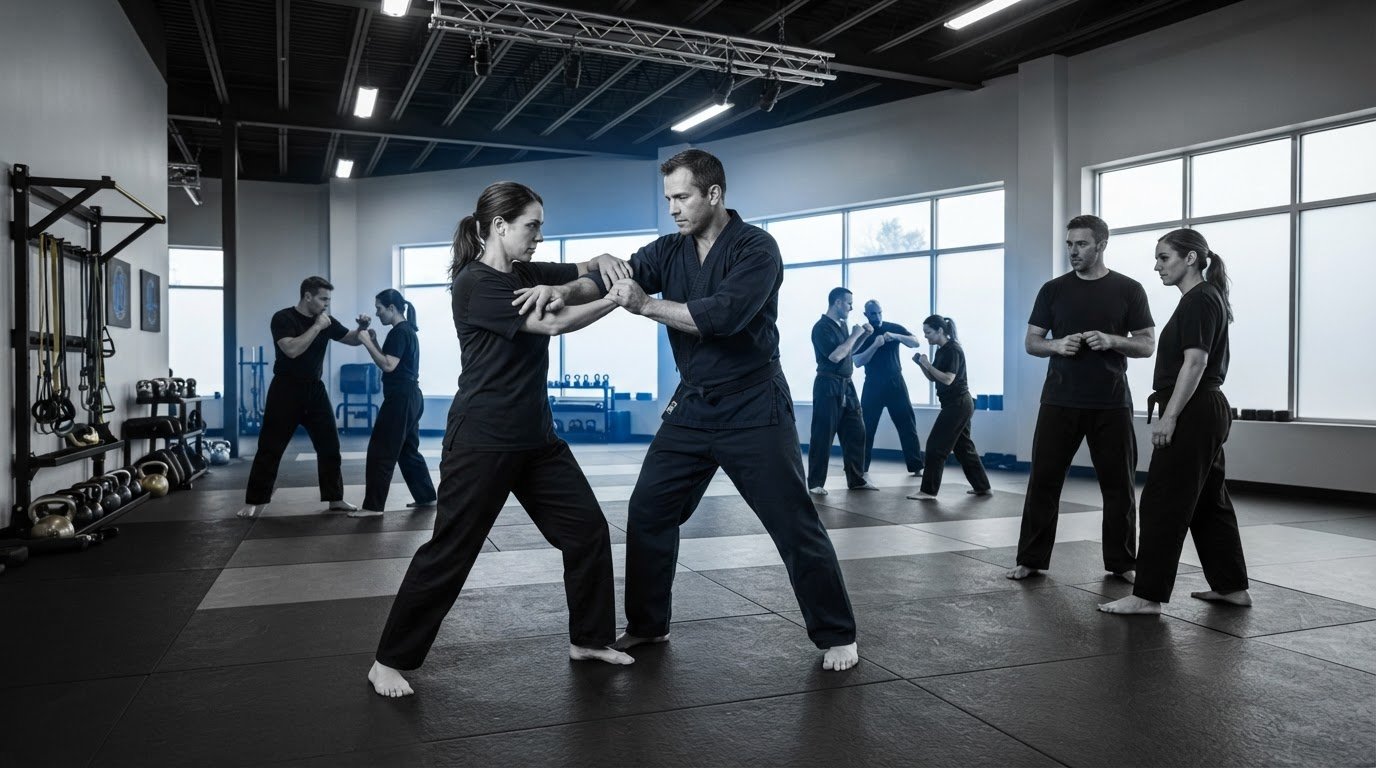
Mastering self defense for real life requires more than just understanding the OODA loop or the mechanics of a burst; it requires the repetition and pressure testing that only a dedicated facility can provide. Performance Krav Maga, the KMFA National Headquarters located in Egg Harbor City, is led by Chief Instructor Greg Dziewonski. We provide a training environment that mirrors the intensity of the street while maintaining the safety of a structured classroom. Our culture is a calculated blend of high-energy empowerment and disciplined authority. You won't find a room full of egos here. You'll find a family-like community of students and professionals dedicated to the transition from vulnerability to strength. We prioritize your safety and survival over sport trophies or competitive points.
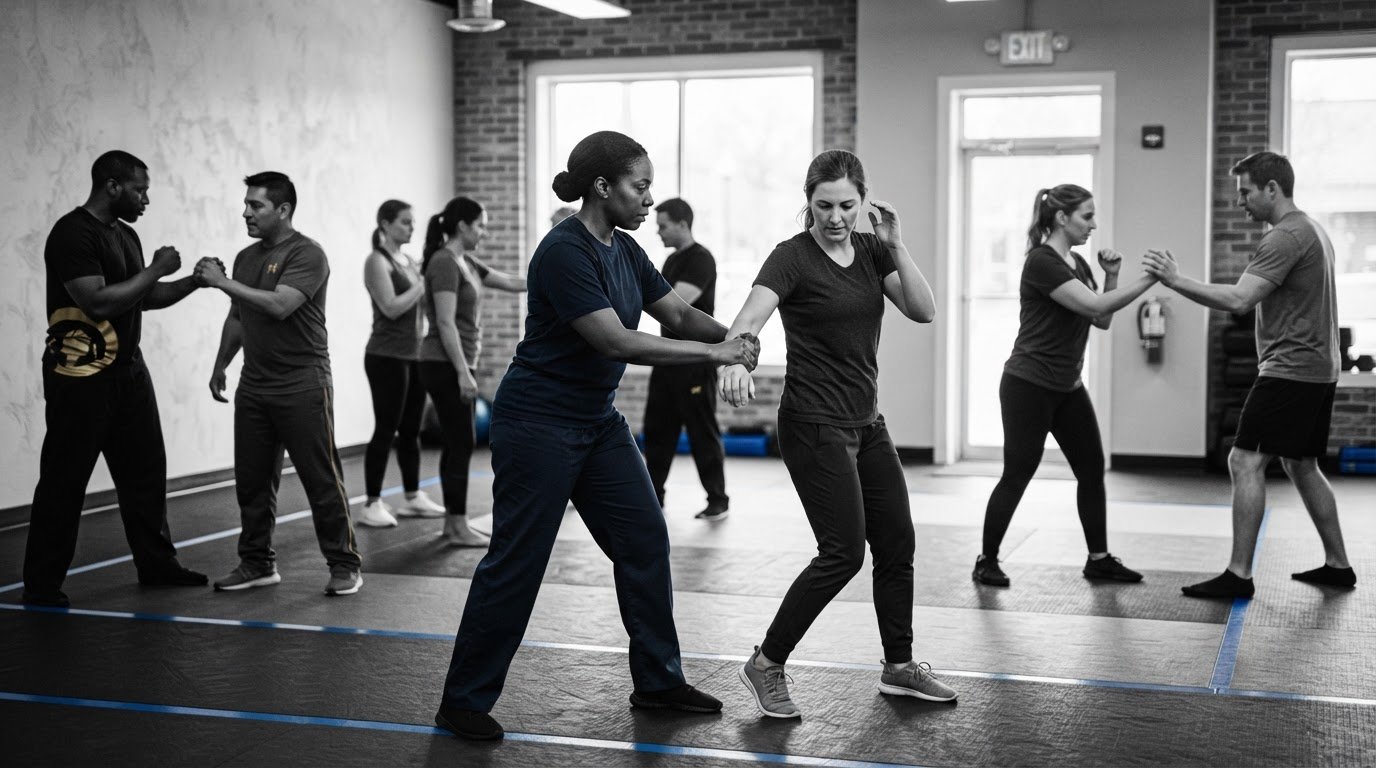
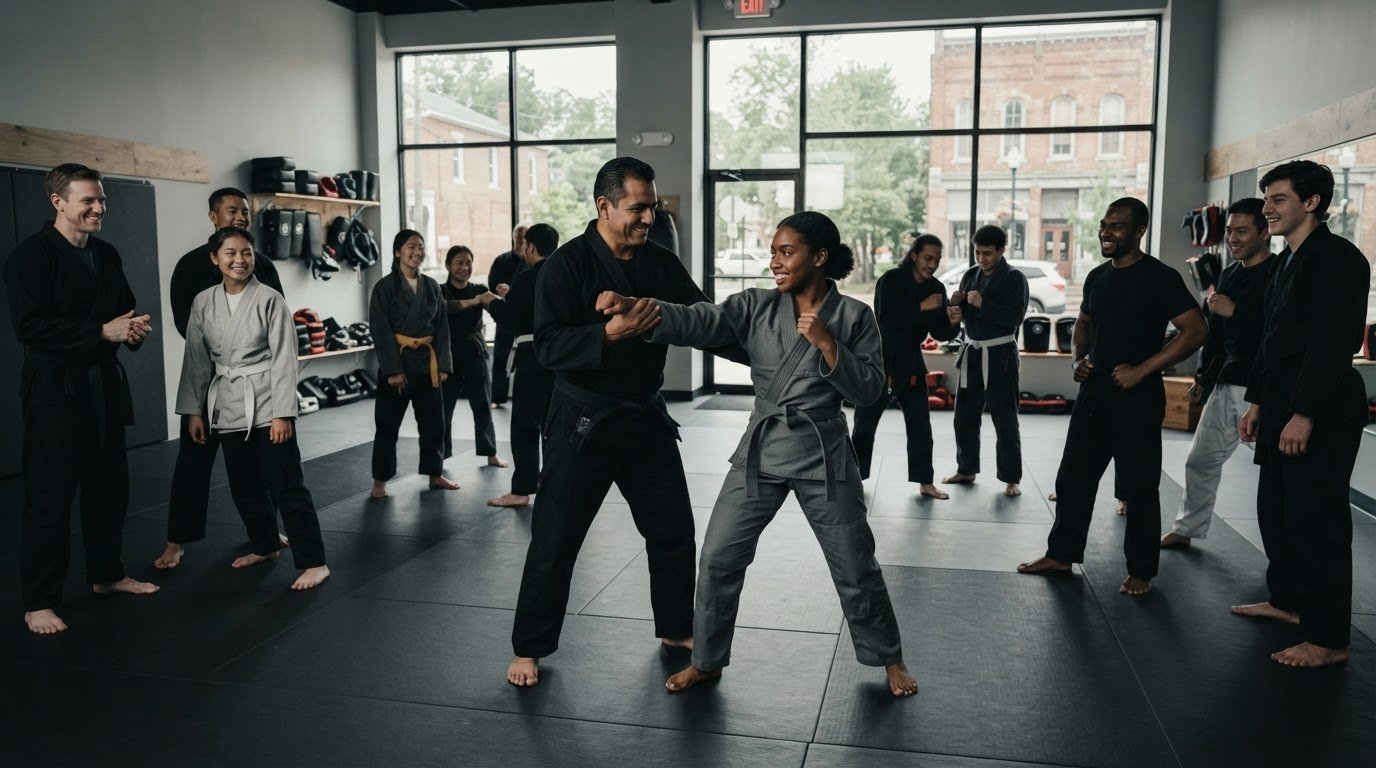
The transition from a beginner to a formidable practitioner happens through consistent, high-value instruction. Our Krav Maga classes are designed for all fitness levels, ensuring that every student can build a functional shield against violence. We don't just teach you how to punch; we teach you how to survive. This is the definitive destination for those seeking self defense for real life in a modern, unpredictable world. We invite you to experience a session where the only goal is your ability to go home safe.
Authentic Israeli Training in Egg Harbor City
Our pedigree of instruction is rooted in the original Israeli methodology, but our curriculum is ruthlessly focused on the modern world. We adapt our techniques to address current threats that generic workshops often ignore. Our students train to neutralize aggressors in scenarios involving carjackings, active shooters, and multiple attackers in confined spaces. This "no-ego" culture welcomes everyone from the uninitiated beginner to the seasoned professional. We believe that physical competence is a psychological boost that everyone deserves. You'll learn to remove obstacles and move with continuity, utilizing a utilitarian system that respects tradition but values efficiency above all else.
Your First Step Toward Becoming Formidable
Walking through the door for your first session is the most important move you'll ever make. You can expect a high-value, low-pressure introductory experience where we ground technical terminology in practical, everyday language. Beyond the tactical skills, the physical conditioning benefits of a Krav Maga workout are significant. You'll build elite fitness while simultaneously sharpening your survival instincts. We provide a structured, logical path to achieving the confidence that comes from readiness. Don't wait for a threat to find you before you decide to prepare. Join Performance Krav Maga and start your journey to real-world readiness today.
Take Command of Your Personal Safety
Survival is a choice made long before a threat appears. You now understand that real-world readiness requires more than just physical technique; it demands a psychological shift and a commitment to situational awareness. By weaponizing your natural reflexes and training for 2026 threat profiles, you replace vulnerability with a formidable sense of competence. Tactical training isn't about collecting trophies or mastering complex, sport-specific movements. It's about ensuring you have the tools to protect yourself and your family when the stakes are highest.
Performance Krav Maga serves as the National Headquarters for the Krav Maga Federation (KMFA). Led by Chief Instructor Greg Dziewonski, our facility offers a reality-based curriculum that prepares you for the unpredictable nature of violence. This is the definitive path to mastering self defense for real life in an environment that values efficiency and results. You have the framework; now you need the reps.
Secure Your Spot at the KMFA National Headquarters in Egg Harbor City
Take the first step toward a more confident, prepared version of yourself. We're ready to help you build the skills that matter most.
Frequently Asked Questions
Is Krav Maga effective for a smaller person against a larger attacker?
Krav Maga is specifically designed to equalize the playing field for smaller individuals by focusing on leverage and targeting physiological weak points. It utilizes explosive aggression toward vulnerable areas like the eyes, throat, and groin, which cannot be strengthened by muscle mass. By prioritizing speed and efficiency over brute force, you can neutralize a larger aggressor before their size advantage becomes a factor in the encounter.
How long does it take to learn basic self-defense for real-life situations?
You can achieve a significant level of tactical proficiency within three to six months of consistent training. Because self defense for real life systems focus on gross motor skills and natural reflexes, the techniques are easier to retain under high-stress conditions than complex sport movements. This accelerated timeline is intentional; it ensures you are prepared to respond to a threat in the shortest possible window of preparation.
Do I need to be in good shape to start self-defense classes?
You don't need to be at peak fitness to begin training in our self-defense classes. The curriculum is designed to meet you at your current physical level while simultaneously building your functional strength and cardiovascular endurance. Real-world violence doesn't wait for you to reach a fitness goal, so we focus on making you formidable exactly as you are today while your conditioning improves over time.
What is the difference between Krav Maga and MMA for street safety?
MMA is a regulated combat sport with rules, referees, and weight classes designed to ensure a fair match. Krav Maga is a utilitarian survival system that ignores fairness to focus on immediate threat neutralization and escape. It specifically addresses variables that are banned in the ring, such as weapon defense, multiple attackers, and environmental obstacles, making it more applicable to the chaos of a street encounter.
Can self-defense training help with situational awareness in daily life?
Training fundamentally shifts your mindset from oblivious to alert by teaching you to recognize pre-attack indicators and grooming behaviors. You'll learn to live in Condition Yellow, a state of relaxed alertness where you are aware of exits and potential threats without being paranoid. This mental conditioning ensures that situational awareness becomes a reflexive habit, allowing you to identify and avoid danger before it ever becomes physical.
What should I look for in a reputable self-defense school in Egg Harbor City?
Prioritize schools that offer a credentialed lineage and a reality-based curriculum rather than just generic fitness workshops. In Egg Harbor City, you should look for a facility like the KMFA National Headquarters that focuses on modern threat profiles and maintains a disciplined, no-ego culture. A reputable school will prioritize your survival and safety over sport trophies, providing a structured path from vulnerability to physical competence.
Is Krav Maga safe for beginners to train?
Instruction is structured to be safe for beginners while still maintaining the intensity required for realistic training. We use controlled drills to simulate stress, but we ensure that the mechanics of every movement are mastered before increasing the pace. This disciplined approach allows you to build confidence and muscle memory in a supportive environment, ensuring you can train hard without the risk of unnecessary injury.
Does real-life self-defense training include weapon defense?
Weapon defense is a core component of any program focused on survival in the modern world. Your training must include the mechanics of neutralizing threats involving knives, sticks, and firearms from the very beginning. Mastering self defense for real life means you are prepared for the most dangerous variables an attacker might introduce, giving you a tactical advantage in the most high-stakes survival scenarios.
Comments