
Self-Defense for the LGBTQ Community in NJ: How to Choose a Supportive Class

What if the first sign of a supportive self-defense class isn’t a slogan, but how the instructor answers your questions? Searching for self defense for LGBTQ community NJ can mean weighing practical skills against concerns about assumptions, physical contact, and partner drills. Those concerns are valid. You should be able to understand what a class involves before deciding whether it feels right for you.
A good fit combines useful training with respect for each student’s boundaries and experience. This guide explains how to assess an instructor’s approach, beginner support, partner assignments, and options for adapting drills. You’ll also find questions to ask before visiting, so you can make an informed choice without pressure to share personal details.
For readers in South Jersey, Performance Krav Maga in Egg Harbor City is a local option to consider for practical self-defense and Krav Maga instruction. No LGBTQ-specific class or accommodation policy is confirmed, so ask the school directly about its current practices around names and pronouns, physical adjustments, privacy, and raising concerns. Start with clear questions and look for clear answers.
Table of Contents
What LGBTQ-friendly self-defense in New Jersey should actually mean
How to compare self-defense classes for LGBTQ students in NJ
Will Krav Maga feel too intense or intimidating for a beginner?
A practical checklist for choosing a supportive class near Egg Harbor City
What to expect when considering Performance Krav Maga in Egg Harbor City
What LGBTQ-friendly self-defense in New Jersey should actually mean
Supportive training is defined by what students experience, not just by inclusive wording on a website. In a respectful class, instructors communicate clearly, avoid assumptions about identity or ability, and make room for questions and boundaries. Students should be able to learn practical skills without pressure to disclose personal information or take part beyond their comfort.
LGBTQ people aren’t a single audience with identical safety needs, physical abilities, or preferences around contact and training partners. One student may want to practise verbal boundary-setting; another may prioritize movement and escape skills. A class doesn’t need to be LGBTQ-only to be supportive, but claims about a specific program or accommodation should be confirmed directly with the school.
Respect is visible in the way a class communicates
Look for instructors who invite students to share names and pronouns without making disclosure mandatory. You should be able to ask about partner drills or physical contact privately and set limits on personal sharing. Notice whether instructors use respectful language and avoid assumptions about students’ bodies, relationships, or experience. Clear, specific answers matter more than a general promise that everyone is welcome.
Practical self-defense includes more than physical techniques
Self-protection can involve awareness, setting boundaries, using verbal responses, and looking for a chance to leave, as well as physical skills. A neutral overview of the physical and legal dimensions of self-defense offers helpful background, but a class should explain how its own curriculum works. Physical drills should build progressively, with instructors explaining the contact involved and offering ways to adjust participation to a student’s comfort.
Ask how students practise scenarios, how partners are assigned, and what happens if someone needs to pause or modify a drill. Practical training should develop usable responses without treating intensity as proof of toughness. For broader guidance on evaluating options in the area, see this practical self-defense classes guide.
When considering self defense for LGBTQ community NJ, evaluate both the skills taught and the way instruction is delivered. Respectful communication, clear boundaries, and adaptable practice are concrete points to ask about before deciding whether a class fits.
How to compare self-defense classes for LGBTQ students in NJ
Compare what a school can explain and demonstrate, not just the words it uses to describe its culture. A welcoming claim is a starting point, not proof that a class will respect your boundaries or suit your needs. The Human Rights Watch resource on violence and inequality provides wider context, but your decision about a specific class should be based on direct answers about its teaching practices.
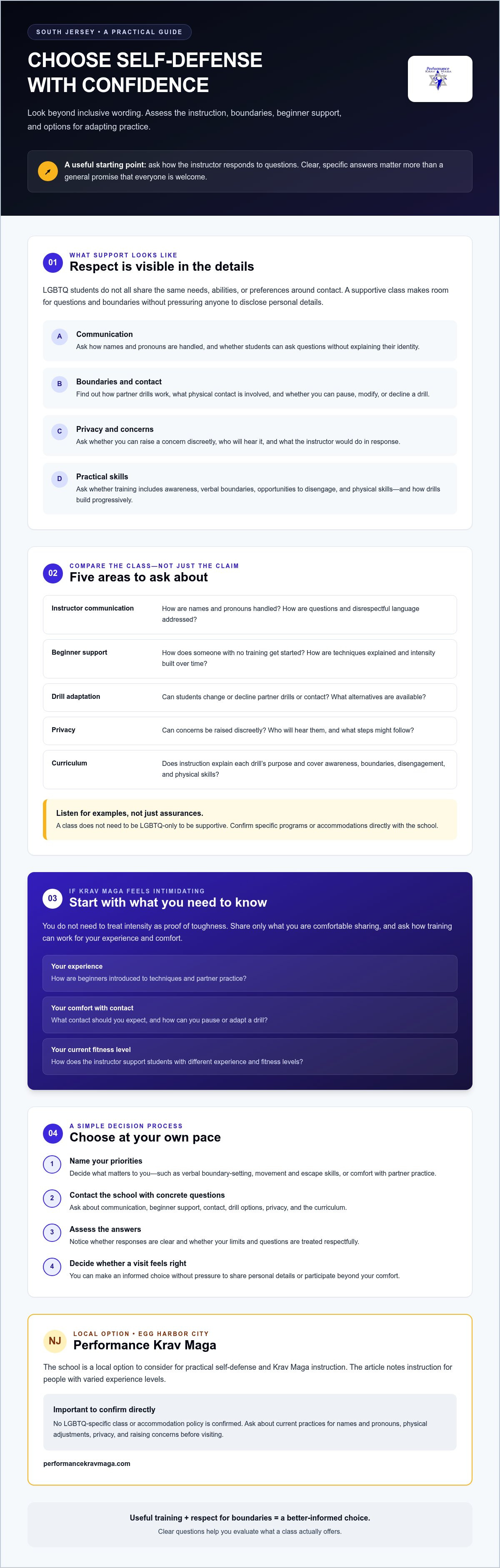
Use these criteria to make comparisons concrete. Ask for examples rather than relying on broad assurances.
Questions to ask an instructor before your first visit
Keep the conversation focused on what you need to know. Ask how instructors handle names and pronouns, whether students may adapt or opt out of partner exercises, and how a newcomer can raise a concern privately. Notice whether the answers are direct and specific. You don’t have to disclose personal details to find out how a class is run.
Compare teaching style, not just labels
Good teaching makes the goal of each exercise clear, explains partner roles, and corrects technique without shaming students. Ask how lessons balance physical practice with awareness, boundary-setting, and de-escalation. If a school says it can accommodate different comfort levels, ask what that looks like during an actual drill. The response helps you judge fit better than a label alone.
A useful pre-visit checklist: “How do you handle names and pronouns, adapt or pause contact drills, support beginners, protect privacy, and respond when a student raises a concern?” Use the answers to compare options for self defense for LGBTQ community NJ based on practical details, not promises. If you’re considering classes at Performance Krav Maga, review the school’s class information and contact the school directly to confirm its current practices before visiting.
Will Krav Maga feel too intense or intimidating for a beginner?
It depends on how a school structures its classes, explains drills, and helps newcomers get started. Don’t guess from the name or reputation of the training style. Ask how beginners enter training, how intensity progresses, and whether you can discuss your fitness, prior experience, mobility, and comfort with physical contact before joining an exercise. These are ordinary training considerations, not reasons to feel you need to prove yourself.
LGBTQ students aren’t a single group with one set of needs or preferred approach. The right pace and level of contact will vary from person to person. When considering self defense for LGBTQ community NJ, evaluate a class on its actual teaching practices, not assumptions about who should feel confident or how quickly someone should participate.
What a beginner-friendly class can demonstrate
Look for clear demonstrations before practice, controlled partner work, and instructors who explain what a drill is meant to teach. Students should have room to ask for clarification or pause rather than feeling pushed to keep pace without understanding the exercise. Ask how people with different fitness levels, mobility needs, or contact preferences can take part. Confirm these practices with the school instead of relying on a general “all levels welcome” statement.
During a visit, notice whether the instructor explains the purpose of a movement before adding speed or complexity. That progression can help you understand the skill and make an informed choice about participating. If you’re unsure about a particular drill, ask what the alternatives are before class begins.
How to assess intensity without guessing
Ask what a typical class includes and how time is divided among instruction, conditioning, and partner practice. You can also ask whether contact is expected in a given exercise, how partners work together, and how students signal that they need to stop or adjust. Raise your boundaries before joining a drill. A useful answer should be specific enough to help you decide whether the format fits.
Performance Krav Maga in Egg Harbor City offers instruction for people with varied experience levels, but that alone doesn’t confirm how a particular class is structured or how its intensity is managed. Contact the school to verify current options and ask how your needs can be discussed. For general context on the local training approach, read this Krav Maga classes in Egg Harbor City guide.
A practical checklist for choosing a supportive class near Egg Harbor City
A short plan can make the search for self defense for LGBTQ community NJ feel more manageable. Focus on what you need from a class, then confirm the details directly with schools in Egg Harbor City and nearby Atlantic County. You can start with a private message or phone conversation if that feels more comfortable than visiting first.
Prepare a short list of personal priorities
Before contacting a school, note what would help you assess whether its classes may suit you. Consider your preferred training pace, comfort with partner contact, mobility or accessibility needs, and how you want personal information handled. Share only what’s needed to ask your questions. You don’t have to explain your identity or personal history to find out how a class works.
Write down the questions you most want answered. For example: How do beginners get started? Can students pause or adapt a drill? How can I raise a concern privately? A prepared list keeps the conversation focused and reduces pressure to make a quick decision.
Assess the response and make a low-pressure next move
Use this four-step process:
Identify your needs. Decide which boundaries and class features matter most to you.
Contact schools. Ask your essential questions before travelling or sharing more than you want.
Assess the answers. Look for specific, respectful responses that address the boundaries you raised.
Choose your next step. If the answers are clear and you’re comfortable, ask about visiting. If not, pause your search or contact another school.
Confirm current schedules, beginner entry options, and visit arrangements directly, since these details can change. A visit is a chance to observe, ask follow-up questions, and decide whether the setting feels right. You can leave or pause if it doesn’t. You’re choosing a training environment, not committing to push past your limits.
Performance Krav Maga offers Krav Maga and self-defense instruction in Egg Harbor City. Its classes are one local option to ask about, but no LGBTQ-specific program or accommodation policy is confirmed. Contact the school directly to discuss your priorities and verify current class details before deciding whether to visit. You can explore Performance Krav Maga as a starting point for that conversation.
What to expect when considering Performance Krav Maga in Egg Harbor City
For South Jersey residents comparing training options, Performance Krav Maga is a local school offering practical Krav Maga and self-defense instruction in Egg Harbor City. It serves students with varied experience levels. That provides useful context, but it doesn’t confirm how a particular class is structured or whether its current practices will match your needs. Treat the school as an option to evaluate, not as an LGBTQ-specific program. No LGBTQ-focused class or accommodation policy is confirmed.
What is confirmed about the school
Performance Krav Maga is owned and operated by Chief Instructor Greg Dziewonski and serves as the national headquarters for the Krav Maga Federation (KMFA). Those details describe the school’s leadership and affiliation; they don’t, by themselves, establish its approach to inclusion or student boundaries. For broader context on practical readiness, read the tactical self-defense guide, then use your own questions to assess whether the instruction and class format are a fit.
Questions to bring to a first conversation
A short conversation before deciding whether to visit can help you understand the school’s current practices without sharing more than you’re comfortable with. Ask directly, and listen for clear, practical answers:
How do instructors handle students’ names and pronouns?
How are partners assigned, and can students adapt or decline a partner drill?
What options are available if a student needs a physical adjustment or wants to pause?
How can someone raise a concern privately, and who should they speak with?
What is the current class schedule, how can beginners participate, and is an introductory visit available?
These questions help you check details rather than rely on assumptions. If an answer is unclear, ask for an example of how the situation is handled during class. You can mention only the information relevant to your decision, such as a preference for limited contact or a need to understand the beginner process.
Choosing self defense for LGBTQ community NJ means finding instruction that fits your goals as well as your comfort. If you’re considering Performance Krav Maga, contact the school to discuss your questions and confirm current class details before deciding whether to visit. Take the next step only when you have enough information to make your choice.
Frequently Asked Questions
Is Krav Maga suitable for LGBTQ beginners?
Krav Maga may be worth considering if the teaching style, pace, and partner work suit your needs. Ask how beginners get started, how instruction progresses, and whether drills can be modified or paused. You can also ask how instructors respond to questions and boundaries. Don’t rely on a general label to judge fit. Contact the school directly, consider its current answers, and decide whether you feel comfortable.
Can I ask a self-defense instructor about pronouns and partner drills before class?
Yes. You can ask before attending, and you choose how much personal information to share. Ask how instructors address students, assign partners, and handle contact or drill modifications. A clear, respectful response can help you assess whether the class may fit your preferences. If the answer feels dismissive or unclear, you can pause and compare other options rather than feeling obliged to attend.
How do I find LGBTQ-friendly self-defense classes in New Jersey?
Start by defining what respectful training means for you, such as privacy, communication, or choice around partner contact. Contact schools in your area and ask about those practices, beginner participation, and class structure. Compare specific answers rather than relying only on promotional language. For self defense for LGBTQ community NJ, verify current local options directly, especially if you’re looking in Egg Harbor City or elsewhere in Atlantic County.
Do I need to be fit or have martial arts experience to start self-defense training?
No single fitness level or experience requirement applies to every school or class, so ask about the specific instruction you’re considering. Find out whether beginners can participate, how drills are adjusted, and what an initial class involves. If relevant, mention movement limitations or contact preferences without sharing more than you choose. You don’t need to assume you must reach a particular fitness level before asking.
What should I ask before joining a self-defense class as a trans or nonbinary person?
Ask about the practices that matter to you, such as how instructors handle names and pronouns, partner assignments, physical contact, and private concerns. If changing or shared spaces are relevant, ask how those are handled rather than assuming what facilities or policies exist. You decide which questions to raise and how much to disclose. Confirm current practices directly; a general claim of being welcoming isn’t a substitute for specific answers.
Is self-defense training a guarantee of personal safety?
No class can guarantee that you’ll avoid harm or control another person’s behavior. Training can help you practise skills and think through awareness, boundaries, and possible responses, but real situations are unpredictable. Be cautious of any school that promises guaranteed safety. If you’re facing an immediate threat, prioritize getting to a safer place and contacting trusted support or appropriate local emergency resources.
Where can I ask about self-defense training near Egg Harbor City, NJ?
Performance Krav Maga offers Krav Maga and self-defense instruction in Egg Harbor City for people with varied experience levels. Contact the school directly to confirm current class details and ask about beginner participation, partner drills, communication, and privacy. No LGBTQ-specific class or accommodation policy is confirmed, so use the conversation to assess whether the school’s current practices fit your needs. Asking questions doesn’t obligate you to enroll.
Take the next step on your terms
Choosing self defense for LGBTQ community NJ starts with finding training that respects your boundaries and teaches practical skills. Compare how instructors communicate, support beginners, and handle partner drills, contact, and privacy. Ask direct questions before visiting, then decide whether the answers and class format feel right for you. You can take your time.
Performance Krav Maga offers Krav Maga and self-defense instruction in Egg Harbor City for people with varied experience levels. Chief Instructor Greg Dziewonski owns and operates the school, which is also the national headquarters for the Krav Maga Federation (KMFA). Confirm current class options and inclusion practices directly.
Contact Performance Krav Maga to discuss your training questions and ask what to expect before deciding whether to visit. Choose your next step at your own pace, with the information you need.


Comments